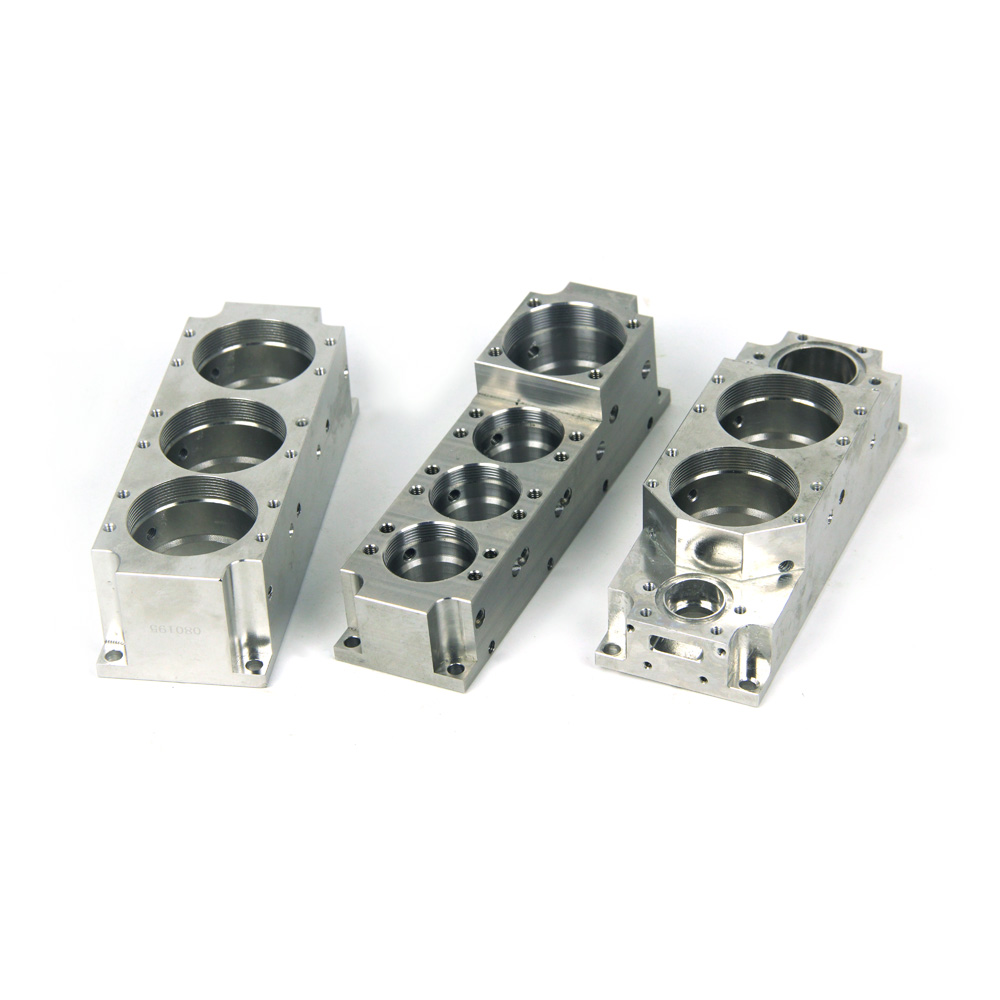
Heavy Half Axle CNC machining
In mechanical equipment, the shaft is a very important component, usually the core element of power output,

The half shaft is the core transmission component of the drive axle in construction machinery, responsible for transmitting differential power to the drive wheels. It needs to withstand high torque, impact loads, and bending moments, and is commonly used in heavy equipment such as excavators, bulldozers, and cranes; According to the support form, full floating (only torque transmission) or semi floating (torque transmission+bending) are commonly used, and high-strength alloy steels such as 40Cr and 42CrMo are mainly used as materials
Application characteristics: The working environment of construction machinery half shafts is harsh (mud, vibration, heavy load), requiring high fatigue strength and resistance to bending and twisting; Fully floating type is used for overloaded equipment (such as mining trucks), which is easy to maintain and the bridge shell does not bear bending; Semi floating is used for medium-sized machinery such as excavators, with a compact structure but complex stress distribution.
Key points of production process: The product is mainly produced by forging, which can improve the intergranular structure, enhance mechanical properties, and save materials and machining allowances. Then, it undergoes heat treatment quenching and tempering, precision machining, threading or gear, sprocket and other transmission structures, and final heat treatment hardening treatment to reduce wear and improve the service life of the product.
Key control points: Complete fiber streamline of forgings, avoiding folding cracks; Heat treatment ensures that the toughness of the heart matches the surface hardness; Precision machining ensures coaxiality based on the central hole (runout ≤ 0.05mm); The splines and cone surfaces must undergo non-destructive testing to confirm the absence of subsurface defects.
There is also a type of mixing shaft, which is a commonly used power output component in industries such as chemical and agricultural machinery.
The stirring shaft is the core transmission component in chemical machinery that transmits torque, drives the stirring blade to achieve material mixing, heat and mass transfer. It is widely used in equipment such as reaction vessels, mixers, and dissolution tanks, supporting key processes such as homogenization, reaction acceleration, suspension dispersion, and gas-liquid contact in chemical production.
Chemical reaction intensification: By homogeneous mixing, the contact efficiency of reactants is improved and reaction time is shortened (such as polymerization, esterification, hydrogenation reactions).
Heat and mass transfer promotion: Enhance fluid convection, reduce temperature differences and concentration gradients, and improve heat transfer and dissolution/absorption rates (such as crystallization and absorption tower feed premixing).
Solid liquid/liquid-liquid suspension and dispersion: prevent settling (such as catalyst slurry, pigment preparation) or achieve emulsification, bubble dispersion (such as fermentation, coating production).
High viscosity material handling: used in conjunction with screw belts, anchor type and other propeller types for stirring and heat transfer of viscous media such as adhesives and polymer melts (often requiring reinforced rigid or corrosion-resistant stirring shafts).
Special working condition adaptation: using jacketed shafts, hollow shafts (for heating/cooling medium entry), flexible shafts (for small spaces/non-standard containers) or anti-corrosion coating/alloy shafts (for acid and alkali resistant, high temperature and high pressure environments).
Our company is equipped with various machine tools such as the cnc lathe, cnc turning center, milling machine, cnc machine,grinding machine, etc.and has integrated various supply chains to provide customers with comprehensive processing services. We can customize various types of shaft components for customers. And provide a complete set of services including subsequent heat treatment, surface treatment, etc.